
Workplace Wellbeing & Behaviour Change
What Workplace Wellbeing Can Learn From Atomic Habits
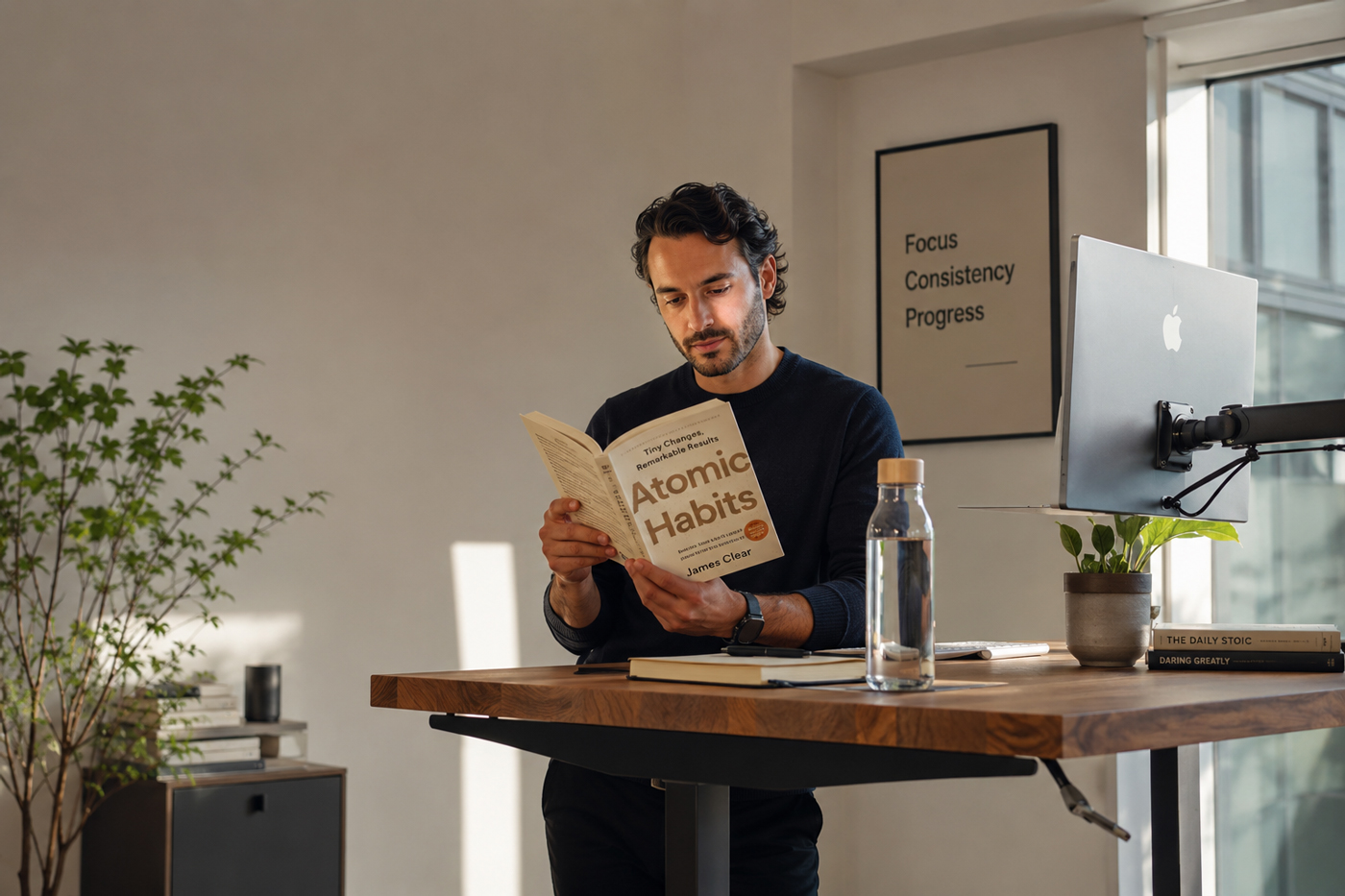
James Clear’s book Atomic Habits became popular for a simple reason: it made behaviour change feel realistic.
Rather than focusing on motivation, dramatic transformation, or extreme discipline, the book emphasises something much more sustainable: small actions, repeated consistently over time.
This idea has important implications for workplace wellbeing.
One of the biggest challenges organisations face is no longer creating awareness. Most employees already understand that physical health, mental wellbeing, movement, recovery, and social connection matter.
The real challenge is helping people engage consistently in ways that fit into everyday working life.
This idea has important implications for workplace wellbeing.
One of the biggest challenges organisations face is no longer creating awareness. Most employees already understand that physical health, mental wellbeing, movement, recovery, and social connection matter.
The real challenge is helping people engage consistently in ways that fit into everyday working life.
The Problem With Many
Workplace Wellbeing
Programs
Many workplace wellbeing initiatives are built with good intentions. However, they often ask too much of employees at the beginning.
People are encouraged to:

Completely change their routines
Commit significant amounts of time
Remain highly motivated
Prioritise wellbeing on top of already demanding workloads
Participate in activities that do not suit their circumstances
For busy teams, this can unintentionally create friction rather than support.
A wellbeing coordinator might launch a new program with enthusiasm, only to find low uptake or engagement dropping sharply after the first week.
A wellbeing coordinator may launch a new program with enthusiasm, only to see participation fall sharply after the first week. An employee may genuinely want to improve their health but think it requires too much time or effors and think:
I simply do not have the capacity for this right now.
This is one reason many organisations struggle with low participation, declining engagement, wellbeing fatigue, and difficulty sustaining momentum.
It is not necessarily because employees do not care.
It is often because sustainable behaviour change rarely begins with a massive transformation. It usually starts with an action small enough to repeat consistently.
.png)
Why Small Habits Support Sustainable Behaviour Change
One of the core ideas explored in Atomic Habits is that habits are easier to establish when the barrier to starting is low.
This principle is particularly relevant to employee wellbeing.
When wellbeing activities feel achievable, flexible, low-pressure, and realistic within a busy schedule, people are more likely to participate.
This is the thinking behind the our Micro-Habit Methodology™.
Rather than relying on intensity or motivation alone, the methodology focuses on:
Small, achievable actions
Sustainable consistency
Team accountability
Supportive working environments
Long-term habit formation
Sustainable workplace wellbeing begins with achievable consistency.
That might involve:
Fifteen minutes of intentional exercise
Five minutes of mindfulness or recovery
A short walking break during the workday
A small moment of connection with a colleague
A simple daily action that supports mental or physical health
The goal is not perfection. It is not a dramatic transformation or an unrealistic burst of effort.
The goal is to create participation and momentum.
Over time, those small actions can produce meaningful change.
.png)
Small Actions Reduce Resistance
Micro-habits are effective because they reduce the mental resistance associated with starting.
“Exercise for an hour every day” may feel overwhelming.
“Take a 15-minute walk” feels possible.
That distinction matters, especially for people who are time-poor, mentally fatigued, new to exercise, or struggling to maintain consistent wellbeing routines.
A person who feels unable to commit to a 60-minute wellness session may still feel capable of taking a short walk during lunch. That small starting point can change more than expected.
And often, that small starting point changes more than expected.
Many participants begin with the intention of simply completing their 15 minutes. Gradually, they may notice that:
Their energy improves
Their confidence increases
Their routines become easier to maintain
Movement begins to feel more natural
Wellbeing becomes part of everyday life
As one participant shared:
“The 15-minute challenge helped me start a healthy habit without pressure.”
Another participant wrote:
“I used to believe I didn’t have time for exercise, but I’ve realised that even 15 minutes is better than none.”
These comments highlight an important principle: an activity does not need to be large to be worthwhile.
Sometimes, the most effective wellbeing action is simply the one a person feels able to begin.
.png)
Why Identity Can Be More Powerful Than Motivation
Another important idea associated with sustainable habit formation is identity.
Lasting change becomes more likely when people stop thinking:
“I am trying to exercise”
And begin thinking: “I am someone who moves every day.”
This shift does not usually happen through a short burst of motivation. It develops through small actions repeated consistently over time.
Each action becomes evidence of a new identity.
An person may begin to see themselves as:
Someone who prioritises movement
Someone who takes short wellbeing breaks
Someone who supports their mental wellbeing
Someone who makes time for recovery
Someone who participates in positive team habits
This is why the Wellbeing Challenge approach focuses on sustainable repetition rather than intensity.
People do not need to completely transform their lives overnight. They need opportunities to build confidence gradually and develop behaviours that feel realistic.
(We explore this further in our article on the absorption rate mental model: people can only absorb so much behavioural change at once. Smaller changes are often easier to understand, adopt, and maintain.)
.png)
The Workplace Environment Shapes Behaviour
Individual motivation matters, but the surrounding environment also influences behaviour.
Employees are more likely to maintain healthy habits when their workplace makes those habits feel accepted, supported, and normal.
This means workplace wellbeing cannot rely on personal willpower alone.
Team culture, social support, leadership behaviour, and accountability all matter.
Wellbeing Challenge programs are intentionally team-based because shared participation can help positive habits stick.
When teams encourage one another, track progress, celebrate consistency, and normalise wellbeing activities, participation becomes easier to sustain.
One person taking a walking break may not transform a workplace culture.
An entire team regularly taking short walking breaks can begin to change what feels normal.
Over time, workplace wellbeing becomes less performative and more integrated into the way people work.
.png)
Workplace Wellbeing Must Fit Into Real Life
One of the strengths of a micro-habit approach is that it acknowledges reality.
Employees are busy. Energy levels fluctuate. Workloads change. Motivation rises and falls from one week to the next.
A wellbeing program that only works under ideal conditions will be difficult to sustain.
A program that fits into real working life is far more likely to create long-term engagement.
That is why the Wellbeing Challenge methodology focuses on:
Lowering the barrier to participation
Reducing unnecessary pressure
Making wellbeing activities achievable
Allowing flexibility
Helping people build momentum gradually
A short wellbeing activity may appear insignificant when viewed in isolation. However, when that activity is repeated consistently, supported by colleagues, and reinforced by the workplace environment, its impact can grow.
Consistency gives small actions their power.
.png)
The Future Of Workplace Wellbeing Is Simpler Than We Think
After supporting more than 150 organisations and over 50,000 participants globally, one pattern continues to emerge:
People engage more consistently when wellbeing feels achievable.
Not overwhelming. Not performative. Not dependent on perfect motivation.
Just realistic enough to begin.
For organisations, this means the success of a workplace wellbeing program should not be measured only by the intensity of the activities offered. It should also be measured by whether employees feel able to participate consistently.
Small beginnings can create meaningful long-term outcomes.
A 15-minute walk can become a daily movement habit. A five-minute recovery break can improve awareness of stress. A team challenge can help make wellbeing part of the workplace culture.
Sustainable wellbeing is not built through occasional bursts of extreme effort.
It is built through small, consistent daily actions that people can maintain in real life.
Featured Blog Articles
Helping organisations turn wellbeing into lasting habits
What Watering A Plant Can Teach Us About Workplace Wellbeing
Sustainable workplace wellbeing often works like watering a plant - small, consistent actions absorbed gradually over time create far more lasting change than overwhelming people with too much at once.

The 20% Of Workplace Wellbeing Habits That Drive 80% Of Results
A small number of simple daily wellbeing habits can often create the majority of long-term improvements in energy, resilience, engagement, and workplace culture.

Why Workplace Wellbeing Fails When Knowledge Doesn’t Turn Into Sustained Action
Most employees already know what improves wellbeing - the real challenge is turning that knowledge into lasting behavioural change.