
What Drives Consistent Participation at Scale - Backed by Peer-Reviewed Research
How small, consistent actions drive meaningful behaviour change at scale.
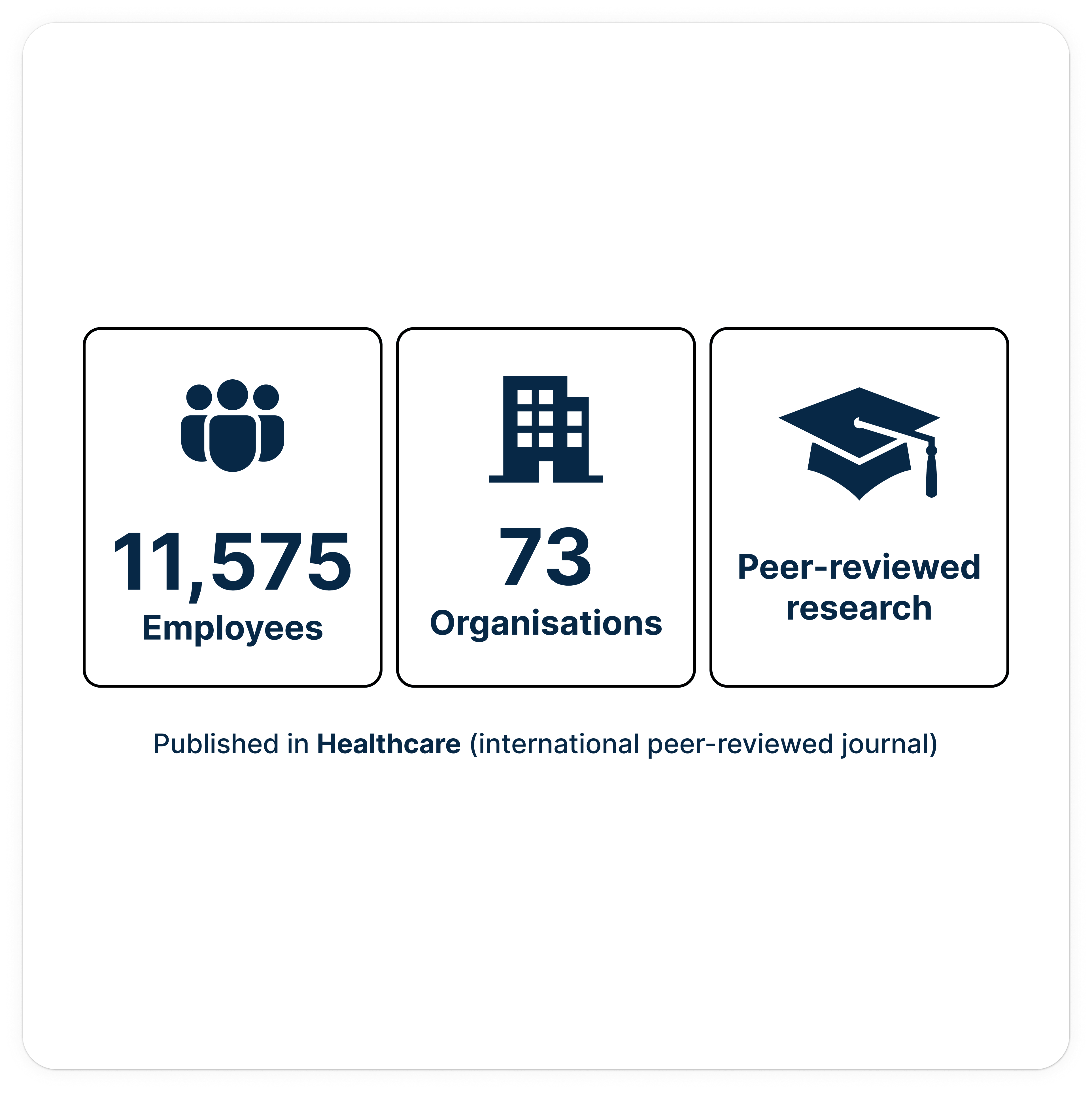
Independently evaluated across 11,000+ employees in peer-reviewed research.
Applied with 50,000+ participants in real workplace settings.
Applied with 50,000+ participants in real workplace settings.
The missing link in workplace wellbeing
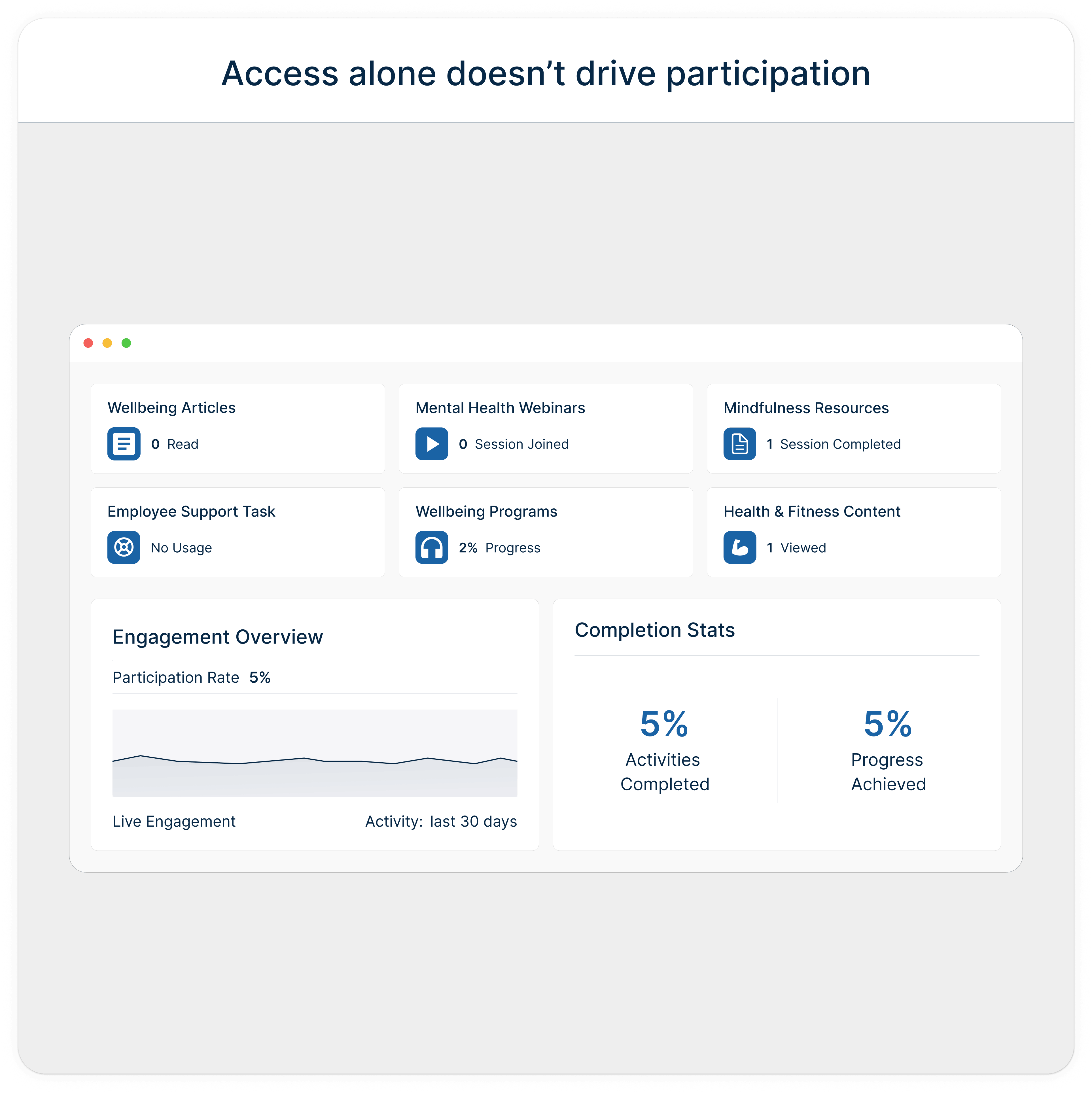
Most organisations already offer wellbeing support - but availability doesn’t guarantee use.
The real question isn't whether wellbeing exists - it's whether it becomes something people do consistently.
The real question isn't whether wellbeing exists - it's whether it becomes something people do consistently.
What the research shows
Sustained involvement is achievable at scale - when wellbeing is designed around:

Small, simple daily actions
Team-based participation
Consistency over time
What happens in practice
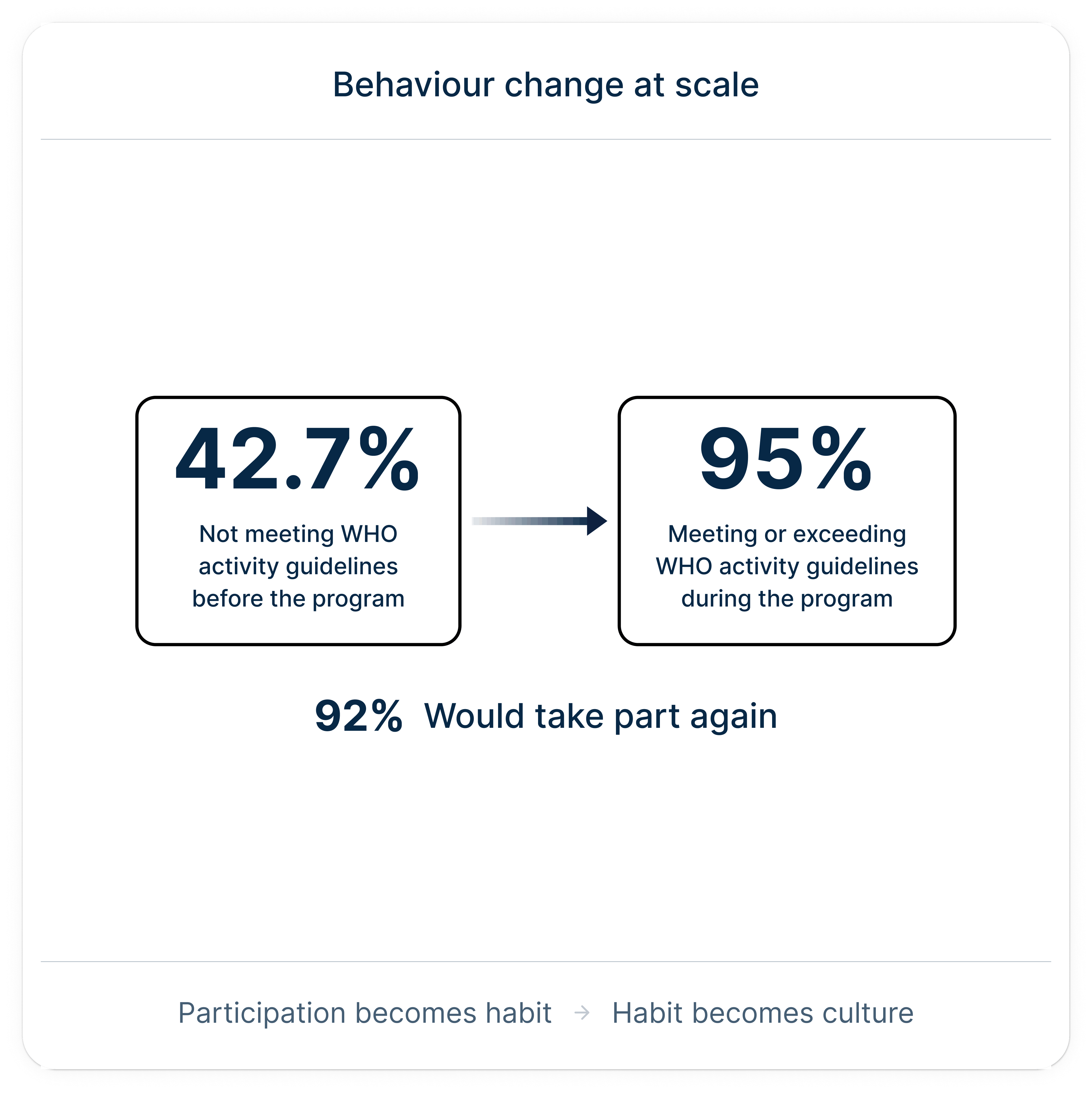
95% meet recommended WHO activity levels
Up from 42.7% below guidelines at the start
92% would take part again
This shows that sustained participation is achievable - when wellbeing is designed to be simple and repeatable.
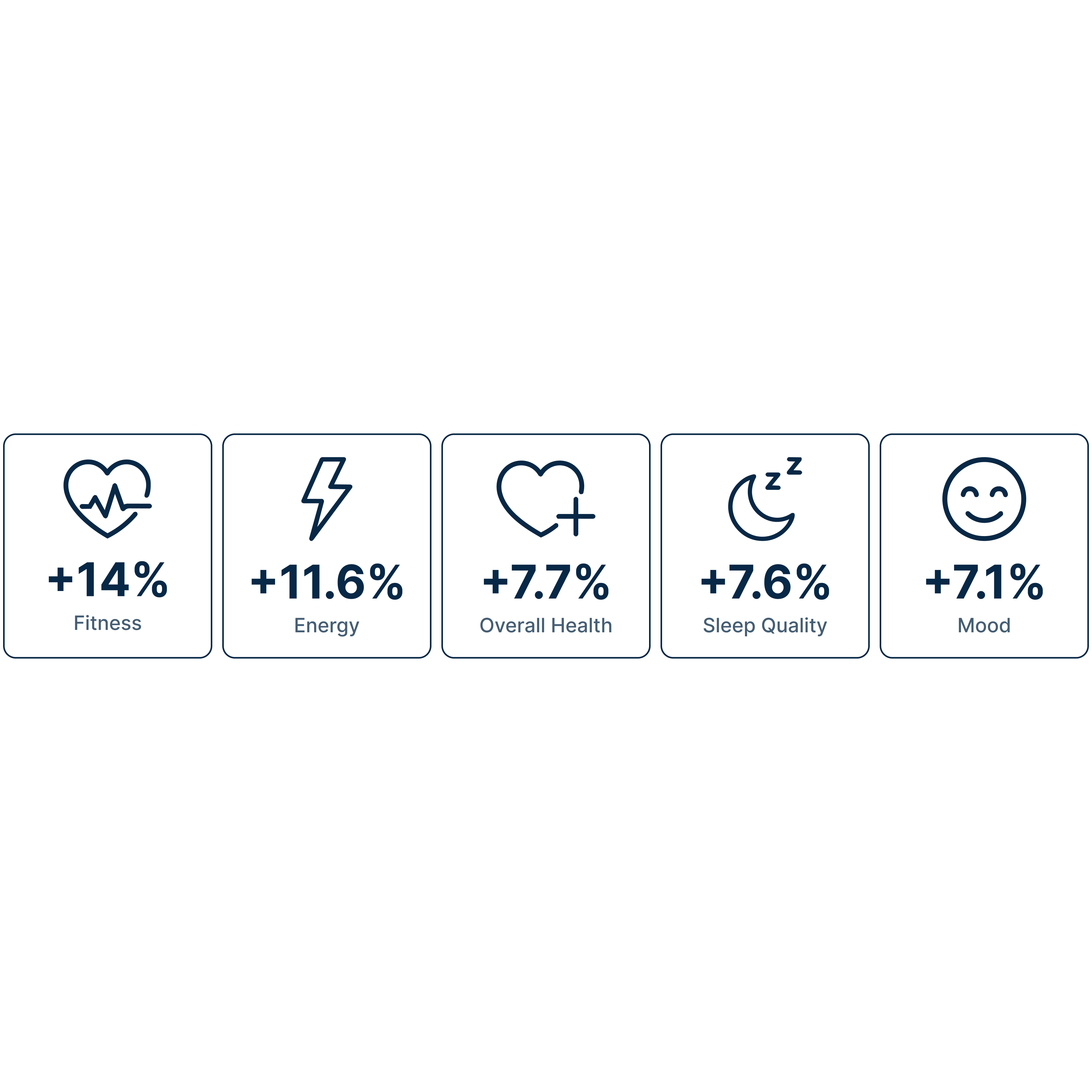
Consistent action leads to measurable improvements in how people feel and perform
Across the program, participants show measurable improvements in:
Fitness (+14%)
Energy (+11.6%)
Overall health (+7.7%)
Sleep quality (+7.6%)
Mood (+7.1%)
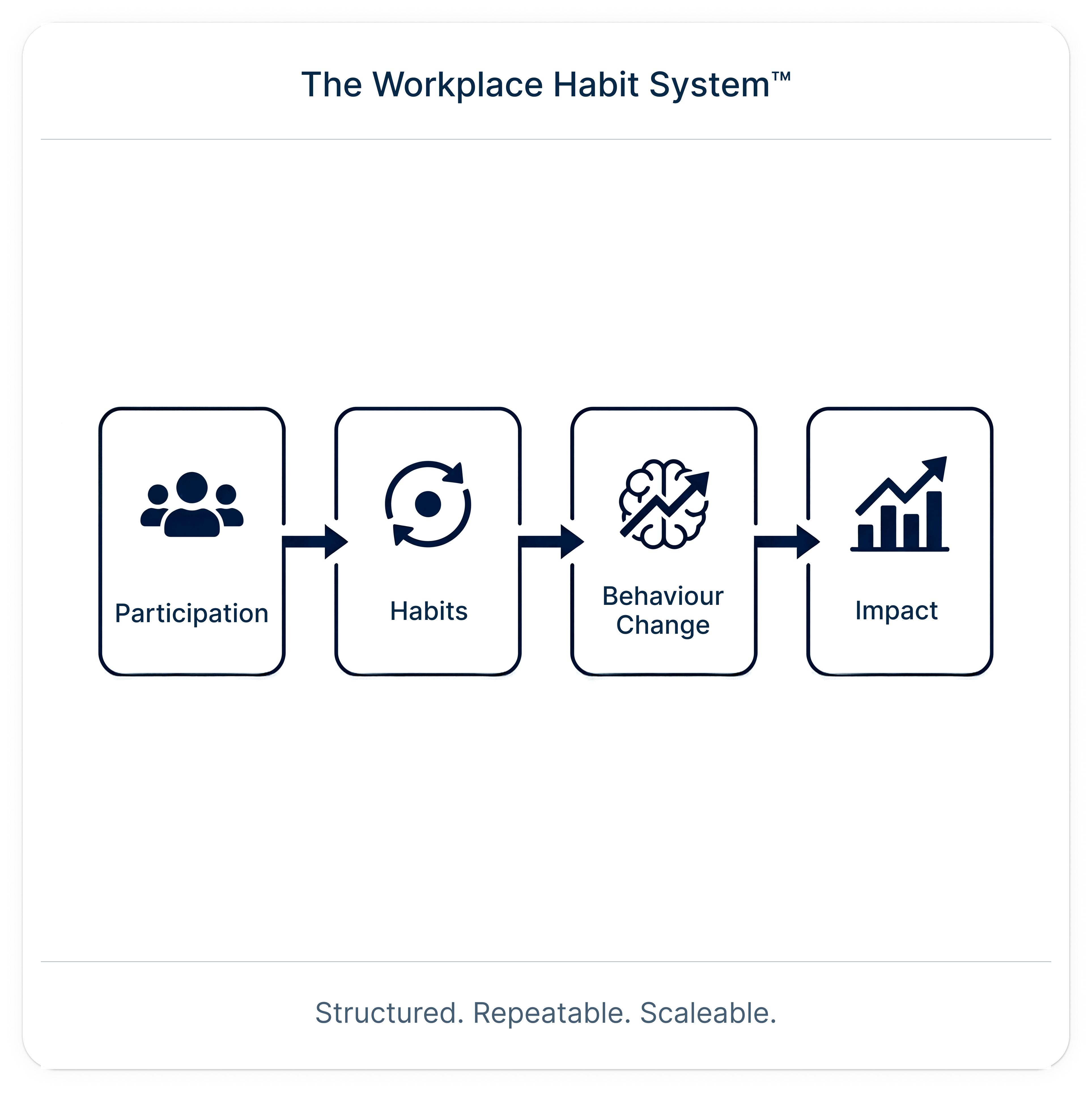
These improvements are driven by small actions repeated consistently over time.
What this means for organisations
For wellbeing to have a meaningful impact, it needs to be something people actually do - regularly.
What drives this
Low barriers (small, manageable time commitments)
Flexibility (self-directed activities)
Team accountability
Consistency over intensity
Why this matters
More people get involved - and stay involved
Programs work across different teams and roles
Outcomes are sustained over time
This is what turns wellbeing from something that’s offered into something people actually do.

Independently evaluated in peer-reviewed research
Conducted in partnership with researchers from the Adelaide University and published in Healthcare (a peer-reviewed international journal).
Study scale
11,575 employees
73 organisations
Across Australia, New Zealand, and the UK
What was measured
Participation and engagement over time
Behaviour change
Health and wellbeing outcomes
Research team
Professor Carol Maher - Research Professor of Population and Digital Health
Dr Ben Singh - Lead Researcher
Dr Ty Ferguson - Research Fellow
See how this could work in your organisation
In this 15-minute walkthrough, we can show you how the Workplace Habit System™ works - and how it could apply in your organisation to create meaningful, lasting improvements in health, energy, and overall wellbeing.